Qualifying a reliable tool box manufacturer for OEM programs requires a systematic evaluation of their production capabilities, quality assurance systems, and supply chain robustness. For B2B importers, distributors, and procurement teams, successful manufacturing partnerships hinge on a supplier's proven ability to consistently deliver products that meet precise specifications while managing production volumes efficiently. Choosing the wrong partner can lead to margin-eroding claims, delayed shipments, and compromised brand reputation.
Qualification Priorities
- Evidence over claims: Shortlist suppliers who can document performance specs (load rating, coating system, spare parts plan), not just brochure claims.
- Spec lockdown: Freeze an OEM/ODM spec pack before sampling, including dimensions, drawer layout, locks, accessories, color, logo placement, and packaging.
- Process control: Validate QC checkpoints (incoming, in-process, final) and define accept/reject rules to reduce batch-to-batch drift.
- Commercial clarity: Confirm MOQ, lead time, and change-control rules in writing, including material substitutions and tolerance limits.
- Objective auditing: Use a weighted audit scorecard so procurement and engineering align on tradeoffs between cost, durability, and delivery risk.
Screening Criteria: Market Realities and Mechanical Vulnerabilities
To build a successful OEM program, B2B buyers must understand the end-user friction points that drive returns and brand loyalty. When evaluating how to choose a tool box manufacturer, procurement teams frequently ask how to balance aggressive pricing with the mechanical realities of end-user abuse.
Market feedback from professional technicians and weekend hobbyists reveals a stark divide in expectations. Trade community discussions frequently debate the merits of 19-gauge steel for light-duty garage use versus the heavy-duty requirements of young automotive technicians entering the field who need professional-level sets capable of surviving daily shop abuse. Furthermore, secondary market value remains a key indicator of brand durability; retiring mechanics pricing used premium boxes demonstrate the long-term ROI of heavy-duty construction. For B2B buyers, this means your RFQ must clearly define the target load class and steel gauge before approaching a factory.
Simultaneously, high-volume e-commerce reviews on cheap starter kits frequently expose critical mechanical vulnerabilities highly relevant to B2B importers: drawer slide blowouts, thin metal denting during transit, and latch misalignment. While "tool box price" is a major search demand driver, hyper-focusing on cost introduces severe margin risks. The challenge for B2B procurement is to achieve cost-efficiency without sacrificing the structural integrity that prevents these common failures.
Evaluating a Tool Box Manufacturer's Factory Capabilities
Assessing the capabilities of a potential partner involves a deep dive into their production infrastructure, technological sophistication, and overall capacity to meet your specific volume and customization requirements for OEM tool boxes.
Metal Fabrication and Production Technology
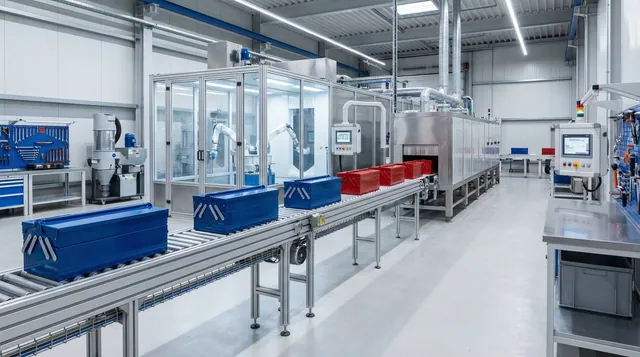
Examine the manufacturer's machinery and production lines. Modern equipment for metal fabrication, such as CNC bending and laser cutting, alongside robotic welding, indicates efficiency and precision. Inquire about their tooling capabilities for custom tool boxes and their capacity for rapid prototyping. A facility utilizing automated powder coating lines can achieve a more uniform finish and higher throughput compared to manual processes, which is critical for industrial storage solutions.
Quality Control Manufacturing Protocols
Consistent product quality is non-negotiable. Investigate the manufacturer's inspection points throughout the production process. This typically includes incoming material inspection (verifying steel gauge and alloy composition), in-process checks (weld integrity, dimensional accuracy), and final AQL inspections. Request access to their defect rates and corrective action reports. A manufacturer committed to quality control manufacturing will have clear, documented procedures and a history of continuous improvement.
SAFEWELL Qualification Watchpoints
Based on our experience managing OEM/ODM workflows, here are proprietary insights to help you navigate factory negotiations and avoid common pitfalls during a factory audit.

MOQ and Spec-Lock Notes
- For industrial distributors, MOQ should be confirmed at the SKU + finish + accessory-bundle level, not just at the broad product-family level.
- Freeze drawings, coating code, lock/caster configuration, carton spec, and spare-parts list before sample sign-off so late quote changes do not spill into lead time.
- If mixed-SKU or mixed-color loading matters, ask for the supplier's rule set up front instead of assuming the first MOQ applies to every combination.
QC Watchpoints Buyers Should Put in Writing
- Do not approve the RFQ until the supplier agrees on critical-to-quality items such as latch/hinge consistency, handle durability, and internal tray fit after transit.
- Ask for photo or video evidence for corner protection and packaging rigidity for dent-sensitive surfaces, because these are exactly the items that tend to trigger claims later.
- Agree on who signs off IQC / IPQC / OQC checkpoints and which defects count as claimable, rather than leaving that decision to the factory floor at shipment time.
Packaging and Claims Pitfalls
- Treat packaging as a commercial-risk topic, not a late-stage admin task. Corner crush, drawer-face rubbing, and hardware damage usually become margin problems, not just warehouse problems.
- Define a claims pack in advance: batch reference, photos, response window, spare-parts policy, and credit/replacement path. This shortens after-sales friction when defects appear.
- If the order is export-facing, confirm carton strength, pallet rules, moisture protection, and movement restraint before the first container leaves the plant.
Supplier Qualification Scorecard
Use this scorecard during your factory audit to objectively compare potential manufacturing partnerships.
| Audit Category | Key Evaluation Metric | Red Flags to Watch For | Weight |
|---|---|---|---|
| Production Capacity | CNC machinery, automated coating, monthly volume limits | High reliance on manual welding; outdated press brakes | 25% |
| Quality Assurance | Documented IQC/IPQC/OQC, AQL standards, testing labs | No clear accept/reject criteria; messy floor organization | 25% |
| Engineering & Customization | CAD capabilities, rapid prototyping, tooling ownership | Inability to modify standard designs; slow drawing turnaround | 20% |
| Packaging & Logistics | Export-grade carton specs, drop-test compliance, pallet rules | Flimsy corner protection; no moisture barriers for sea freight | 15% |
| Commercial Terms | Clear MOQ rules, transparent lead times, warranty policy | Vague claims process; bait-and-switch pricing post-sample | 15% |
Qualification Checklist
- RFQ Scope: Define target market, usage environment, load class, dimensions, and required configuration (drawers/shelves/accessories).
- OEM/ODM Spec Pack: Provide dimensioned sketches, finish/color code, branding placement, and packaging requirements.
- Sampling Plan: Require a pre-production sample, golden sample retention, and clear acceptance criteria before mass production.
- Material and Finish: Specify steel gauge ranges, coating process, and corrosion resistance expectations (test method plus threshold).
- Functional Testing: Mandate drawer slide cycle tests, lock function checks, caster load/rolling resistance (for carts), and stability checks.
- QC Checkpoints: Establish an IQC/IPQC/OQC checklist, AQL level, photo records, and designate who signs off on critical-to-quality items.
- Compliance and Labeling: Detail carton marks, barcode/label format, hazardous substance requirements (if applicable), and pallet requirements (e.g., ISPM-15).
- Lead Time Plan: Confirm capacity, peak-season buffers, partial shipment rules, and version control for spec changes.
- After-Sales and Claims: Request a spare parts list, warranty scope, defect classification, and a written claim workflow with timelines.
- Commercial Terms: Finalize Incoterms, payment terms, tooling ownership, confidentiality/IP, and change-order pricing rules.
Questions Buyers Ask During Qualification
What MOQ assumptions should buyers confirm before launching an OEM program?
Buyers should confirm MOQ at the SKU, finish, and accessory-bundle level rather than assuming one product-family MOQ applies to every combination. This avoids late quoting changes and mixed-load misunderstandings.
Which QC checkpoints matter most when approving a supplier?
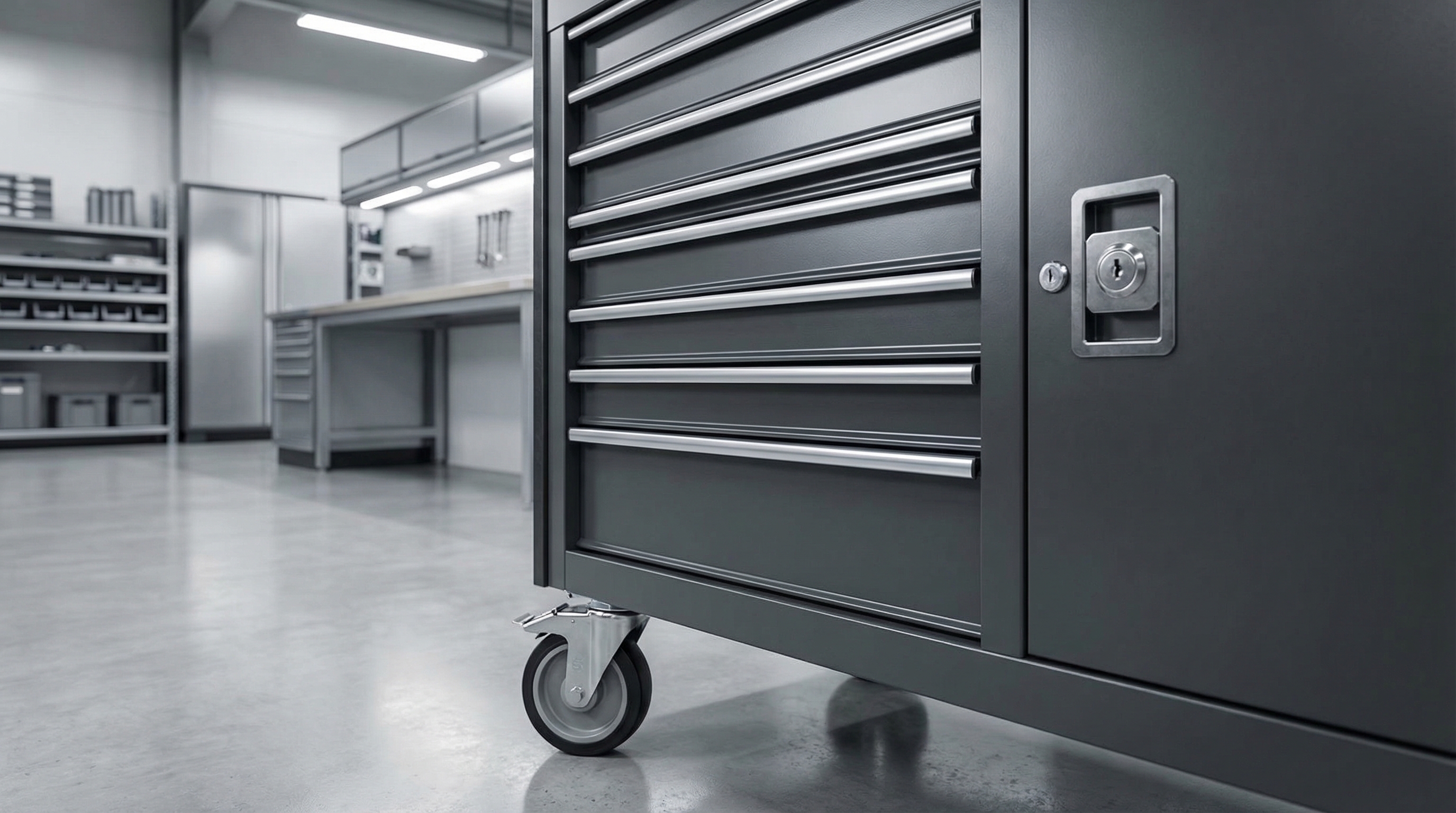
The RFQ should define incoming, in-process, and outgoing checks, plus who signs off on drawer alignment, weld consistency, finish quality, hardware fit, and packaging condition before shipment.
How should buyers validate lead time for custom orders?
Lead time should be checked against confirmed capacity, material readiness, sample approval timing, and peak-season risk. Buyers should ask what changes trigger a new production schedule.
What should be included in the after-sales and claims workflow?
Define batch traceability, photo requirements, response window, spare-parts policy, and credit or replacement path in writing before the first shipment so claims do not become ad-hoc negotiations.
What MOQ assumptions should buyers confirm before launching a tool box manufacturer program?
Buyers should confirm MOQ at the SKU, finish, and accessory-bundle level rather than assuming one product-family MOQ applies to every combination. This avoids late quoting changes and mixed-load misunderstandings.
Which QC checkpoints matter most when approving a tool box manufacturer supplier?
The RFQ should define incoming, in-process, and outgoing checks, plus who signs off on drawer alignment, weld consistency, finish quality, hardware fit, and packaging condition before shipment.
Compliance and Verification References
Related Reading
Continue with a few closely related product, OEM, and comparison pages.
- Tool Box Product Line - See toolbox variants for distribution and OEM programs.
- Supplier Qualification Process - Understand factory qualification and program controls.
- Tool Box Wholesale Buying Checklist - Read another related article from SAFEWELL News.
- How to Launch a Tool Cart OEM Program - Read another related article from SAFEWELL News.
Where SAFEWELL Helps Buyers Screen Supplier Risk
- OEM/ODM Customization: We tailor your product line (size, layout, branding, packaging) to keep your channel positioning differentiated.
- Stable SKU Continuity: We maintain strict spec and version control for your OEM programs to reduce channel confusion and ensure consistent quality.
- Practical MOQ Planning: Our reorder rhythms are aligned with your warehouse turnover and seasonal peaks, preventing overstock or stockouts.
- Rigorous QC Checkpoints: We enforce documented inspection points before shipment, resulting in fewer after-sales surprises and margin-eroding claims.
- Efficient Workflow: Our faster quote-to-sample workflow allows you to validate margins and hit your launch windows earlier.
Ready to source reliable industrial storage solutions? Share your target market, expected quantity, required specs, and delivery window. SAFEWELL can provide a practical OEM/ODM proposal complete with MOQ, lead time, QC checkpoints, and risk mitigation notes to streamline your B2B procurement process.
Contact SAFEWELLPrepared by SAFEWELL Industrial Content Team and reviewed against SAFEWELL buyer-support and manufacturing workflow team.