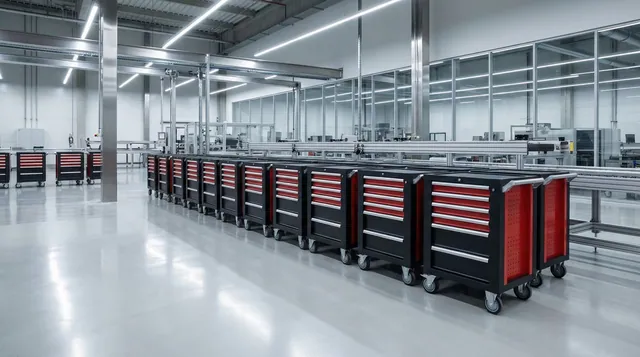
Auditing an OEM tool cart supplier requires a systematic evaluation of their sheet metal fabrication capabilities, quality control protocols, and supply chain stability. For B2B brand owners and procurement teams seeking private label manufacturing, a rigorous audit ensures the factory can meet specific load-bearing requirements, adhere to international export standards, and scale production without compromising structural integrity. Moving from a generic sourcing inquiry to a structured RFQ process minimizes defect rates and secures reliable lead times.
Qualification Priorities
- Documented Performance: Shortlist suppliers who can document performance specs (load rating, coating system, spare parts plan), not just brochure claims.
- Spec Lock: Freeze an OEM/ODM spec pack before sampling: dimensions, drawer layout, locks, accessories, color, logo placement, and packaging.
- QC Validation: Validate QC checkpoints (incoming, in-process, final) and define accept/reject rules to reduce batch-to-batch drift.
- Written Terms: Confirm tool cart MOQ and lead time rules in writing, especially regarding material substitutions and tolerance limits.
- Objective Scoring: Use a weighted factory audit scorecard so procurement and engineering align on tradeoffs like cost, durability, and delivery risk.
Questions Buyers Ask During Qualification
How do we prevent the structural failures commonly reported by end-users?
Field feedback on low-cost ($100-$150) consumer-grade imports frequently exposes critical failures like caster collapse under load, drawer-face rubbing, and corner crush. B2B buyers must treat these as margin-killing defects by enforcing strict dynamic load testing and robust packaging standards before shipment.
Why is OEM customization critical for specialized industrial trades?
End-user discussions in industrial communities consistently highlight the need to modify standard carts—such as adapting them to hold modular storage boxes for flat-surface job sites or requiring distinct drawer setups for welding versus automotive applications. This drives the need for true tool cart OEM ODM customization rather than relying on generic catalog designs.
What should buyers check regarding supplier communication and after-sales support?
Procurement reviews often flag severe communication breakdowns with unverified trading companies, sometimes resulting in complaints of "scam services" where after-sales support completely disappears. Furthermore, end-users frequently struggle to identify model numbers or source replacement parts for generic imports. To avoid this, buyers must verify direct factory communication and establish a formal claims and spare-parts process before awarding the contract.
What MOQ assumptions should buyers confirm before launching a tool cart program?
Buyers should confirm MOQ at the SKU, finish, and accessory-bundle level rather than assuming one product-family MOQ applies to every combination. This avoids late quoting changes and mixed-load misunderstandings.
Which QC checkpoints matter most when approving a tool cart supplier?
The RFQ should define incoming, in-process, and outgoing checks, plus who signs off on drawer alignment, weld consistency, finish quality, hardware fit, and packaging condition before shipment.
How should buyers validate lead time for tool cart orders?
Lead time should be checked against confirmed capacity, material readiness, sample approval timing, and peak-season risk. Buyers should ask what changes trigger a new production schedule.
SAFEWELL Qualification Watchpoints
Navigating the tool cart sample approval process and transitioning into mass production requires strict oversight. Based on our factory-floor experience handling complex RFQs, here are the critical watchpoints buyers must manage to protect their margins and brand reputation.
MOQ and Spec-Lock Notes
- For brand owners and sourcing teams, tool cart MOQ and lead time should be confirmed at the SKU + finish + accessory-bundle level, not just at the broad product-family level.
- Freeze drawings, coating code, lock/caster configuration, carton spec, and spare-parts list before sample sign-off so late quote changes do not spill into lead time.
- If mixed-SKU or mixed-color loading matters for your container strategy, ask for the supplier's rule set up front instead of assuming the first MOQ applies to every combination.

QC Watchpoints Buyers Should Put in Writing
- Do not approve the RFQ until the supplier agrees on critical-to-quality items such as caster brake consistency, rolling resistance, and weld fatigue around the handle/caster plate. These should be formalized in your tool cart quality control checklist.
- Ask for photo or video evidence for cart stability under offset loads and over uneven workshop floors, because these are exactly the items that tend to trigger claims later.
- Agree on who signs off IQC / IPQC / OQC checkpoints and which defects count as claimable, rather than leaving that decision to the factory floor at shipment time. This ensures your tool cart inspection AQL standards are actually enforced.
Packaging and Claims Pitfalls
- Treat packaging as a commercial-risk topic, not a late-stage admin task. Corner crush, drawer-face rubbing, and hardware damage usually become margin problems, not just warehouse problems. Enforce strict tool cart packaging and labeling requirements.
- Define a claims pack in advance: batch reference, photos, response window, spare-parts policy, and credit/replacement path. Establishing a clear tool cart warranty and claims process shortens after-sales friction when defects appear.
- If the order is export-facing, confirm carton strength, pallet rules, moisture protection, and movement restraint before the first container leaves the plant.
Supplier Qualification Scorecard
Use a standardized tool cart factory audit scorecard to remove subjective bias during supplier selection. This ensures your procurement and engineering teams align on actual factory capabilities versus marketing claims.
| Audit Criteria | Red Flag (High Risk) | Green Light (OEM Ready) | Weight |
|---|---|---|---|
| Fabrication Equipment | Manual cutting and welding | CNC laser cutting, robotic welding cells | 25% |
| Steel Quality | Undocumented gauge, mixed scrap | Certified 18-22 gauge cold-rolled steel | 20% |
| Surface Treatment | Outsourced or manual spray | In-house automated powder coating line | 15% |
| QC & Testing | Visual inspection only | 50k cycle drawer tests, dynamic load testing | 20% |
| Export Packaging | Standard single-wall cartons | ISTA-compliant, custom EPS foam, edge guards | 20% |
Qualification Checklist
To ensure a smooth transition from RFQ to delivery, integrate these steps into your tool cart compliance documentation and sourcing workflow:
- RFQ Scope: Define target market, usage environment, load class, dimensions, and required configuration (drawers/shelves/accessories).
- OEM/ODM Spec Pack: Provide dimensioned sketches, finish/color code, branding placement, and packaging requirements.
- Sampling Plan: Mandate a pre-production sample, golden sample retention, and clear acceptance criteria before mass production.
- Material and Finish: Specify steel gauge ranges, coating process, and corrosion resistance expectations (test method plus threshold).
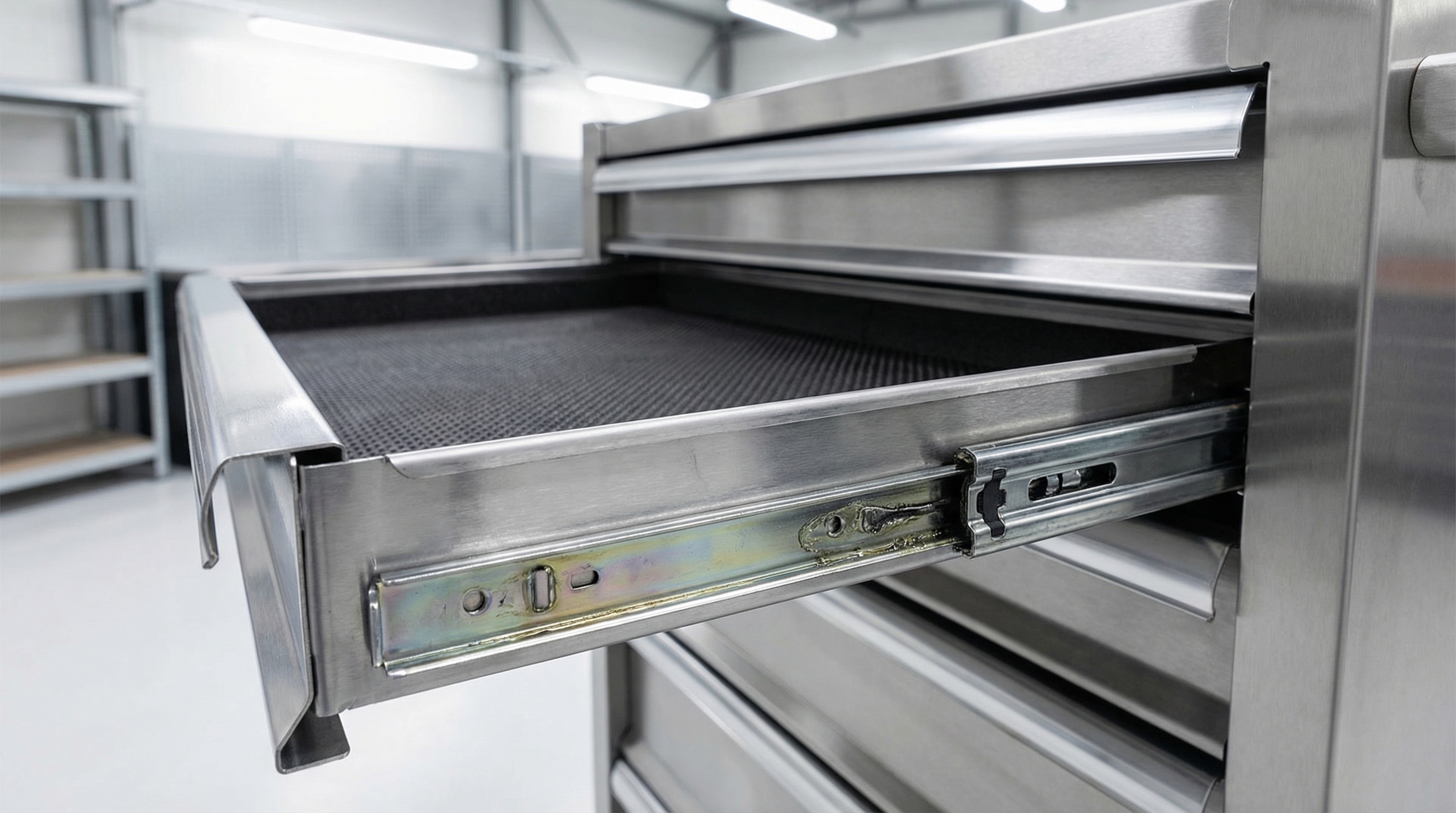
- Functional Testing: Require drawer slide cycle testing, lock function verification, caster load/rolling resistance checks, and stability tests.
- QC Checkpoints: Establish an IQC/IPQC/OQC checklist, define inspection AQL standards, require photo records, and designate sign-off authority.
- Compliance and Labeling: Detail carton marks, barcode/label format, hazardous substance requirements, and pallet rules (e.g., ISPM-15).
- Lead Time Plan: Confirm capacity, peak-season buffers, partial shipment rules, and version control for spec changes.
- After-Sales and Claims: Finalize the claims workflow, including spare parts lists, defect classification, and response windows.
- Commercial Terms: Lock in Incoterms, payment terms, tooling ownership, confidentiality/IP, and change-order pricing rules.
Compliance and Verification References
Related Reading
Continue with a few closely related product, OEM, and comparison pages.
- Tool Cart Solutions - Review rolling cart options and capacity classes.
- OEM/ODM Program Overview - Review manufacturing workflow, sampling, and quality checkpoints.
- Tool Box Wholesale Buying Checklist - Read another related article from SAFEWELL News.
- How to Launch a Tool Cart OEM Program - Read another related article from SAFEWELL News.
Where SAFEWELL Helps Buyers Screen Supplier Risk
Securing a reliable manufacturing partner requires moving beyond generic trading companies to a facility with true process control. SAFEWELL mitigates procurement risk through comprehensive in-house capabilities:
- In-House Fabrication: SAFEWELL operates advanced CNC laser cutting and robotic welding machinery, ensuring precise structural integrity for heavy-duty applications.
- Strict QC Protocols: From raw steel thickness verification to 50,000-cycle drawer testing, quality is monitored at every production stage to meet strict AQL standards.
- OEM/ODM Customization: A dedicated engineering team supports full private label programs, including custom dimensions, modular drawer layouts, and precise RAL color matching.
- Export-Ready Packaging: Products are secured using ISTA-compliant packaging methods to eliminate transit damage, preventing the corner crush and hardware damage that plague generic imports.
Securing a reliable manufacturing partner is the most critical step in launching a successful private label product line. SAFEWELL's core advantage lies in comprehensive OEM/ODM customization capabilities, allowing B2B buyers to engineer tool storage solutions tailored to their exact market specifications. Contact our engineering and sales team today to submit your technical drawings, discuss MOQ requirements, and initiate your Request for Quotation (RFQ).
Contact SAFEWELLPrepared by SAFEWELL Industrial Content Team and reviewed against SAFEWELL buyer-support and manufacturing workflow team.